From anaerobic digestion to
the CHP unit: the complete
biogas cycle, from feedstock
to electricity and heat produced
on site.
From anaerobic digestion to the CHP unit: the complete biogas cycle, from feedstock to electricity and heat produced on site.
A livestock farm, a wastewater treatment plant, a landfill. Three very different operations that share one thing: all three produce organic waste that ferments, generates gas, and that gas can run an engine producing electricity and heat on the spot.
The technology has worked this way for decades, across thousands of installations. What varies is the feedstock. The logic of the plant stays the same.
Biogas is a gas mixture produced by the decomposition of organic matter in the absence of oxygen, a process that occurs naturally in marshes, on the seabed, in the digestive systems of ruminants. In industrial plants, the same process runs inside sealed tanks called digesters.
Composition varies by feedstock, but biogas typically contains 50–70% methane (CH₄), with the remainder made up mainly of carbon dioxide (CO₂) and trace gases. Methane is the component with energy value: the higher its concentration, the more suitable the gas is for running an engine.
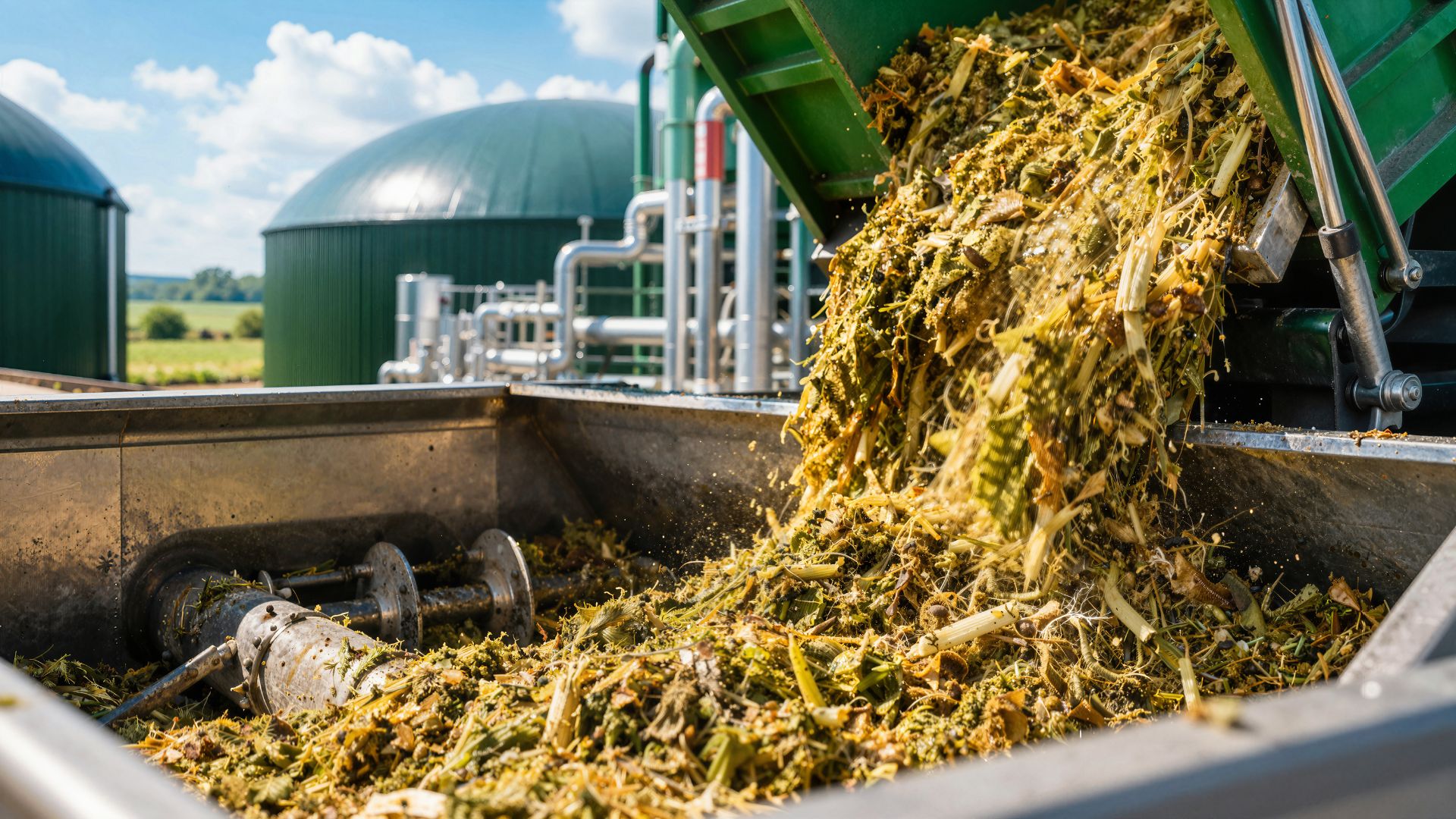
Feedstocks differ considerably from one plant to the next. Livestock operations use slurry and manure from cattle, pigs and poultry, which produce biogas continuously and predictably. Food processing companies feed in process residues: whey, vinasse, vegetable by-products. Civil and industrial wastewater plants work with process sludge. Landfills capture the biogas that forms in the mass of buried organic waste, sometimes years after a site has closed.
MTM Energia works across all these contexts. The Mini-Bio series covers agricultural plants fed by livestock slurry, starting from 25 kWe. The Bio2 series covers larger applications – food industry, wastewater treatment, landfills – up to 1,000 kWe.
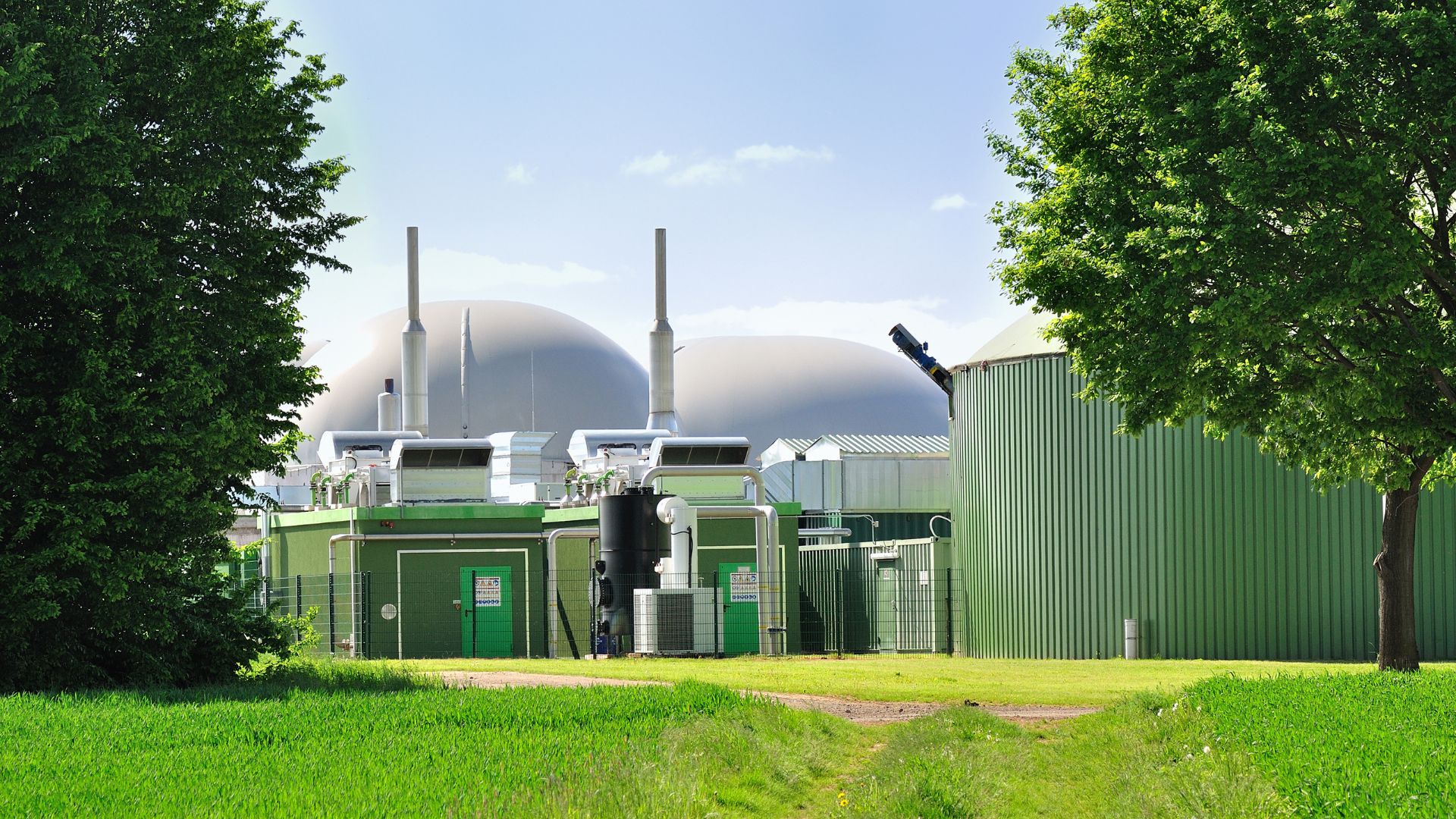
Anaerobic digestion takes place in the digester: a sealed, heated and stirred tank where bacteria break down organic matter without oxygen. The process requires controlled temperatures – typically between 35°C and 55°C – and retention times ranging from a few weeks to over a month, depending on the feedstock. The gas produced collects in the digester cover and is routed to the treatment section.
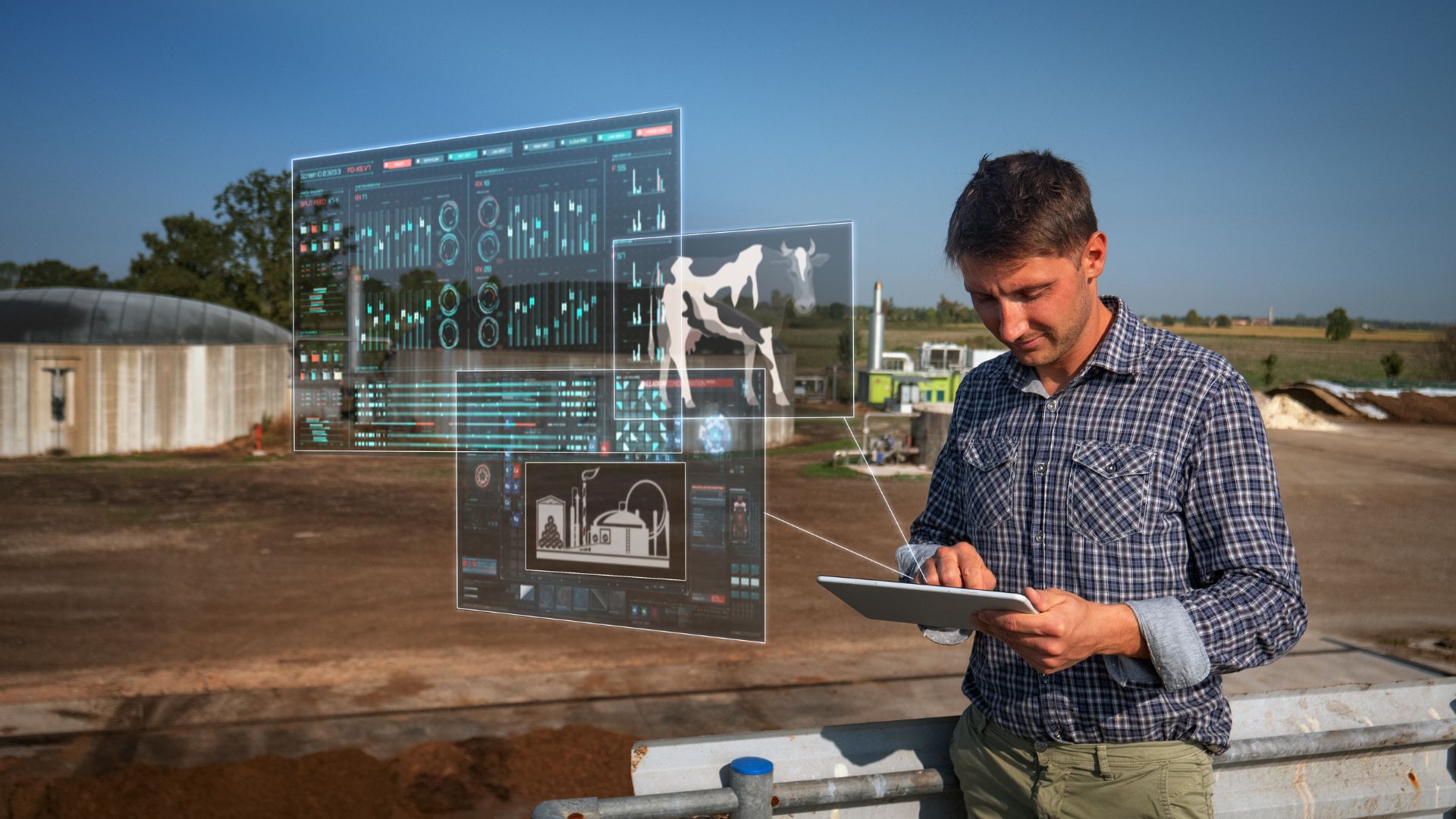
Before reaching the engine, biogas needs cleaning. It contains water vapour, hydrogen sulphide and other impurities that would damage mechanical components over time. Pre-treatment covers dehumidification, desulphurisation and filtration. In MTM Energia plants, this section is integrated into the system and controlled by the same PLC that manages the CHP unit – one control point for the entire chain, from the biology to the switchboard.
The treated gas reaches the gas engine. Combustion drives the piston, the piston drives the alternator, the alternator produces electricity. The heat generated – in the exhaust gases and the cooling circuit – is recovered through heat exchangers and made available as hot water or steam for the process.
One point worth stating clearly: the digester produces gas, but the CHP unit determines how much of that gas actually becomes usable energy. Engine efficiency, pre-treatment quality, operational continuity, these are the parameters that separate a plant that works from one that works well. This is why MTM Energia designs and builds its own CHP units in-house.
A biogas CHP unit produces electricity and heat simultaneously. Overall efficiencies exceed 85–90%, compared with 35–45% for a conventional generator that vents waste heat to atmosphere. The difference is thermal recovery: what other systems discard becomes a second usable energy stream.
The electricity produced covers on-site consumption, farm machinery, process lines, pumping systems. Any surplus can be exported to the grid. Either way, the share of energy purchased externally falls, with a direct effect on operating costs.
The heat recovered from the exhaust gases and engine cooling circuit is available as hot water at 80–90°C or, in more advanced configurations, as steam. It serves to heat the digester itself – which needs thermal input to maintain process temperature – and can also supply district heating networks, drying processes and medium-temperature industrial applications.
When that heat is also used to produce chilled water, via absorption chillers, the plant enters the domain of trigeneration. That configuration suits operations with continuous refrigeration demand: food processing, cold chain logistics, large hospitality facilities. MTM Energia has built biogas trigeneration plants in industrial settings up to 1,000 kWe.
The central point remains self-consumption: generating energy where it is used cuts transport costs, eliminates grid losses and reduces exposure to electricity market volatility. For agricultural businesses, where energy is a significant cost item, this often matters more than any incentive scheme, a point developed further in the dedicated article on self-consumption in agriculture.
Biogas and biomethane start from the same feedstock and the same process. What differs is what happens to the gas after the digester.
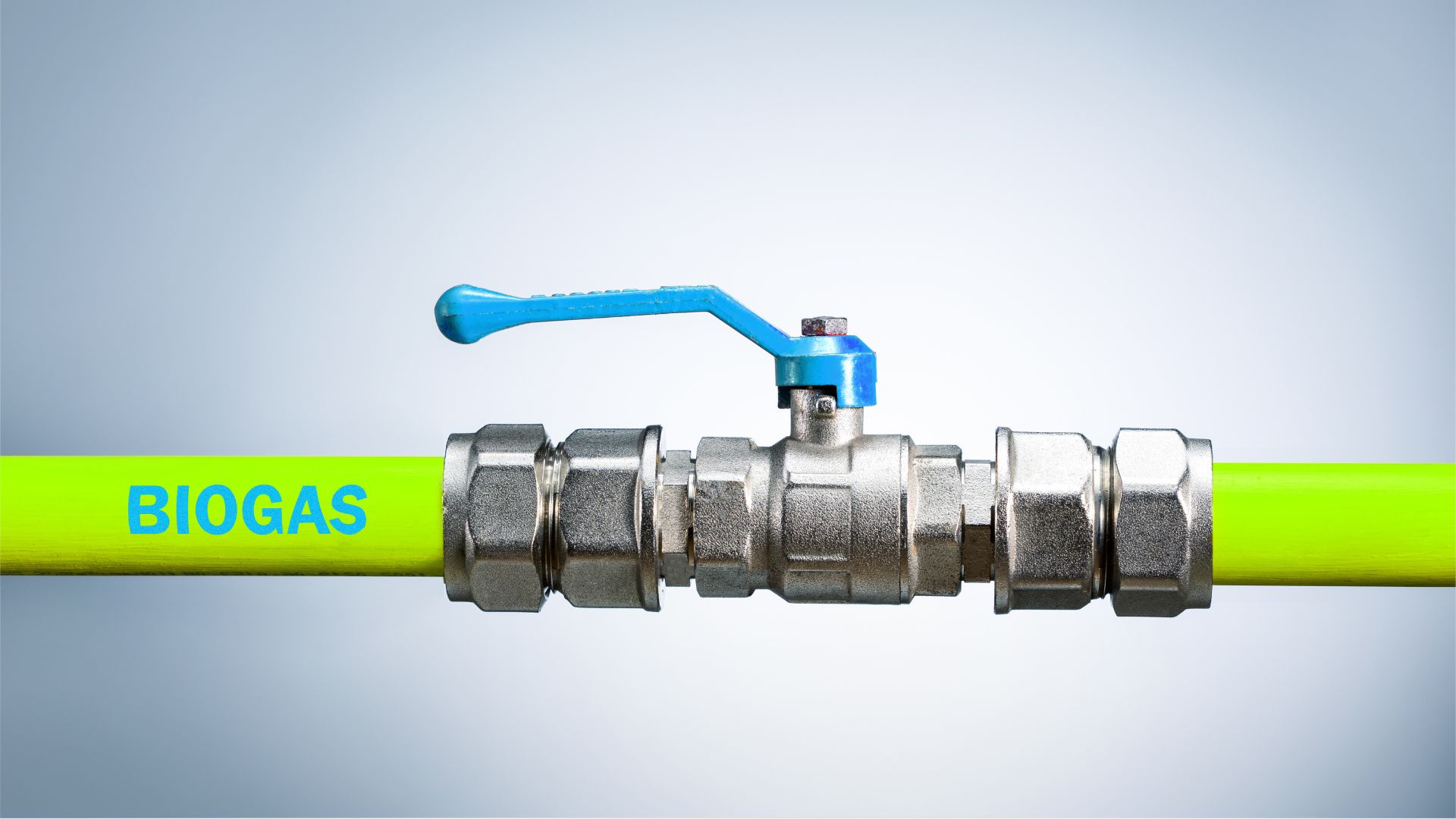
Biogas goes directly into the CHP unit, after pre-treatment, and produces electricity and heat on site. Fewer process steps, lower plant costs, energy demand met locally. This works well where there is a consistent and significant local consumption base: a livestock farm, a wastewater plant, a landfill. In these contexts, self-consumption justifies the investment without relying on incentive frameworks.
Biomethane requires an additional step: upgrading. CO₂ and other impurities are removed until the gas reaches a methane concentration above 95%, equivalent to natural gas. At that point it can be injected into the distribution network or used as fuel for heavy transport. The technical complexity and costs rise, but so do the opportunities: grid access, dedicated incentive schemes, a broader market.
Across Europe, the installed base of biogas plants is substantial, with significant presence in agricultural and livestock sectors. Operators with existing plants frequently evaluate whether it makes sense to proceed with retrofitting towards biomethane, a decision that depends on plant size, biogas quality and proximity to grid infrastructure. There is no universal answer.
MTM Energia works on both routes. For biogas cogeneration: Mini-Bio and Bio2 series plants, from design to turnkey installation. For biomethane conversion: upgrading plants from 50 to 1,000 Sm³/h and retrofitting and derating work on existing installations.
MTM Energia has designed and built biogas CHP plants since 2009, with over 100 installations completed. The range covers 25 kWe to 1,000 kWe, across a wide variety of operating contexts.
The Mini-Bio series is built for the agricultural and livestock sector. Sizes from 25 to 124 kWe, fed by biogas from cattle, pig and poultry slurry. A notable feature is the integrated biology management within the CHP unit itself: a single PLC controls both the digester and the CHP group, reducing space, cabling and maintenance costs. Average operating history is 8,640 hours per year against 8,760 hours available.
The Serie Bio2 covers larger applications, from 150 to 1,000 kWe. It serves food processing companies, civil and industrial wastewater treatment plants, and post-closure landfills. In these contexts the biogas has different characteristics — variable composition, siloxane content in landfill gas, chemical aggressiveness in sewage sludge and plants are designed to order, with corrosion-resistant coatings, full stainless steel piping and components selected from a vetted vendor list.
Both series are supplied turnkey: MTM Energia manages design, installation, regulatory approvals and commissioning. After-sales service includes 24/7 availability, response within 24 hours of a reported fault, remote monitoring via the MTM Connect IoT platform and predictive maintenance.
For operators evaluating a new plant or the revamping of an existing facility, MTM Energia carries out a preliminary technical assessment to establish feasibility and estimate the energy and financial parameters of the investment.
What is the difference between biogas and biomethane?
Biogas is the mixture produced by anaerobic digestion – methane, CO₂ and trace gases – and goes directly into the CHP unit to produce electricity and heat on site. Biomethane is biogas that has been through an upgrading process: CO₂ is removed until the gas reaches over 95% methane content, equivalent to natural gas. It can then be injected into the distribution network or used as fuel for heavy transport. Same origin, different end uses.
What organic waste can be used to produce biogas?
Livestock slurry (cattle, pigs, poultry), food processing residues such as whey and vinasse, civil and industrial sewage sludge, and the organic fraction of municipal solid waste. Landfills produce biogas from buried organic material for years after closure. Yield varies considerably between feedstocks and directly determines CHP unit sizing, it is not a secondary variable.
How much electrical energy does a biogas plant produce?
A 100 kWe CHP unit running 8,000 hours per year produces around 800,000 kWh of electricity, plus a comparable or greater quantity of recovered thermal energy. Exact output figures depend on biogas composition and the site’s consumption profile and are calculated during the design phase.
Can a small biogas plant be viable without incentives?
Often yes. A livestock operation managing its own slurry and consuming electricity and heat on site typically achieves a solid return on investment, because the value of self-consumed energy, electrical and thermal, covers costs within a reasonable timeframe. The critical variable is local energy demand: the more consistent and substantial it is, the more the economics hold without external support.
What are the installation timescales and costs?
Costs vary considerably based on size, configuration and civil works required. A meaningful estimate requires a preliminary technical assessment of the site, which MTM Energia carries out before any quotation. Installation timescales for the Mini-Bio series are generally short; for the Bio2 series, designed to order, they depend on plant complexity and the local permitting process. The starting point is always a site visit or a technical call to establish what is actually involved.