

Cogeneration

How Europe's cogeneration market
is evolving and why integrated systems
are reshaping the commercial
conversation for ESCOs,
EPC contractors and
project developers.
Europe’s cogeneration market is growing, and it isn’t a single market. Combined Heat and Power (CHP) is a well-established segment of the European energy system, but it has been under significant pressure since the 2022 energy price crisis.
According to the most recent EU-wide figures compiled by COGEN Europe (Snapshot Survey 2023, published April 2024, based on Eurostat 2024 data), cogeneration accounted for around 130 GWe of installed electrical capacity in the EU in 2021, generating approximately 12% of the region’s total electricity and 28% of its thermal power production. Across the same year, CHP prevented up to 150 million tonnes of CO2 emissions and saved around 30 Mtoe of primary energy, equivalent to roughly 10% of the EU’s energy efficiency target. It also delivered around 15 bcm of direct natural gas savings, a figure that corresponds to about 10% of Russian gas imports in 2021 (COGEN Europe / Eurostat).
The 2022 energy price crisis then reshaped the sector visibly. According to the same COGEN Europe survey, installed cogeneration capacity and generation declined between 2021 and 2022 in markets representing 55% of total EU CHP capacity, as many operators reduced or paused activity in response to spot gas prices. The recovery is now underway, but it is uneven and structural. Growth is concentrated in specific pockets: cogeneration using renewable energy sources, hybrid systems combining CHP with heat pumps (particularly in Germany), small-scale CHP for district heating (in Poland), industrial CHP (in the Netherlands and France), and greenhouse applications (in France).
Looking to the 2024-2028 horizon, COGEN Europe’s national experts anticipate a decline in seven mature markets on the natural-gas-only segment (Belgium, Denmark, Finland, Germany, Greece, the Netherlands and Portugal). Growth is expected in district heating and cooling, in industrial and residential applications, and above all in the deployment of CHP fuelled by renewable and low-carbon sources: biogases, clean hydrogen, biomass and liquid biofuels. Renewable and waste-based sources already account for 25.5% of the primary energy consumed by EU cogeneration installations, up from 13% in 2009 (COGEN Europe / Eurostat).
Behind these figures, the practical reality for anyone selling, designing or financing CHP projects across Europe is that there is no single European CHP market. There are more than a dozen. Just 75% of total EU cogeneration capacity is concentrated in seven countries: Germany, Poland, the Netherlands, Czechia, Italy, France and Finland. Countries including Poland, Czechia, Italy, Romania, Bulgaria, Greece and Ireland still have significant untapped potential, with cogeneration currently accounting for less than 30% of their thermal electricity generation (COGEN Europe / Eurostat). Each of these markets sits at a different point on the adoption curve, with different regulatory drivers, different fuel priorities and different customer expectations.
For an EPC contractor, an ESCO or a business developer working across Europe, the practical implication is straightforward. The technology decision (CHP, trigeneration, biogas, biomethane upgrading, integration with photovoltaic, heat pumps and storage) is downstream. The country decision – which market to prioritise, in which order, with which local partners – is upstream, and it is where value is either created or lost.
The United Kingdom hosts one of Europe’s most established anaerobic digestion sectors. Around 730 AD facilities are currently operating across the country, producing an estimated 21 TWh of biogas per year (Green Gas Taskforce, 2025). Biomethane capacity connected to the grid is expected to reach approximately 10 TWh by the end of 2025 (Alder BioInsights, 2025).
What makes the UK particularly active for commercial partners in the coming years is a policy inflection point. The Feed-in Tariff (FiT) and Renewable Heat Incentive (RHI) support schemes, which underpinned the first generation of biogas-to-electricity CHP installations, begin expiring from 2027. Plants reaching the end of their subsidy period must find a new economic rationale, and for many the answer will be conversion to biomethane injection into the gas grid. According to the National Non-Food Crops Centre (NNFCC), 166 of the existing UK biogas plants are technically suitable for conversion to biomethane, and 44 of them are already economically viable at current market conditions (NNFCC, 2022). The government’s Biomass Strategy 2023 sets a target of 30 to 40 TWh of biomethane production per year by 2050 (UK Department for Energy Security and Net Zero, 2023).
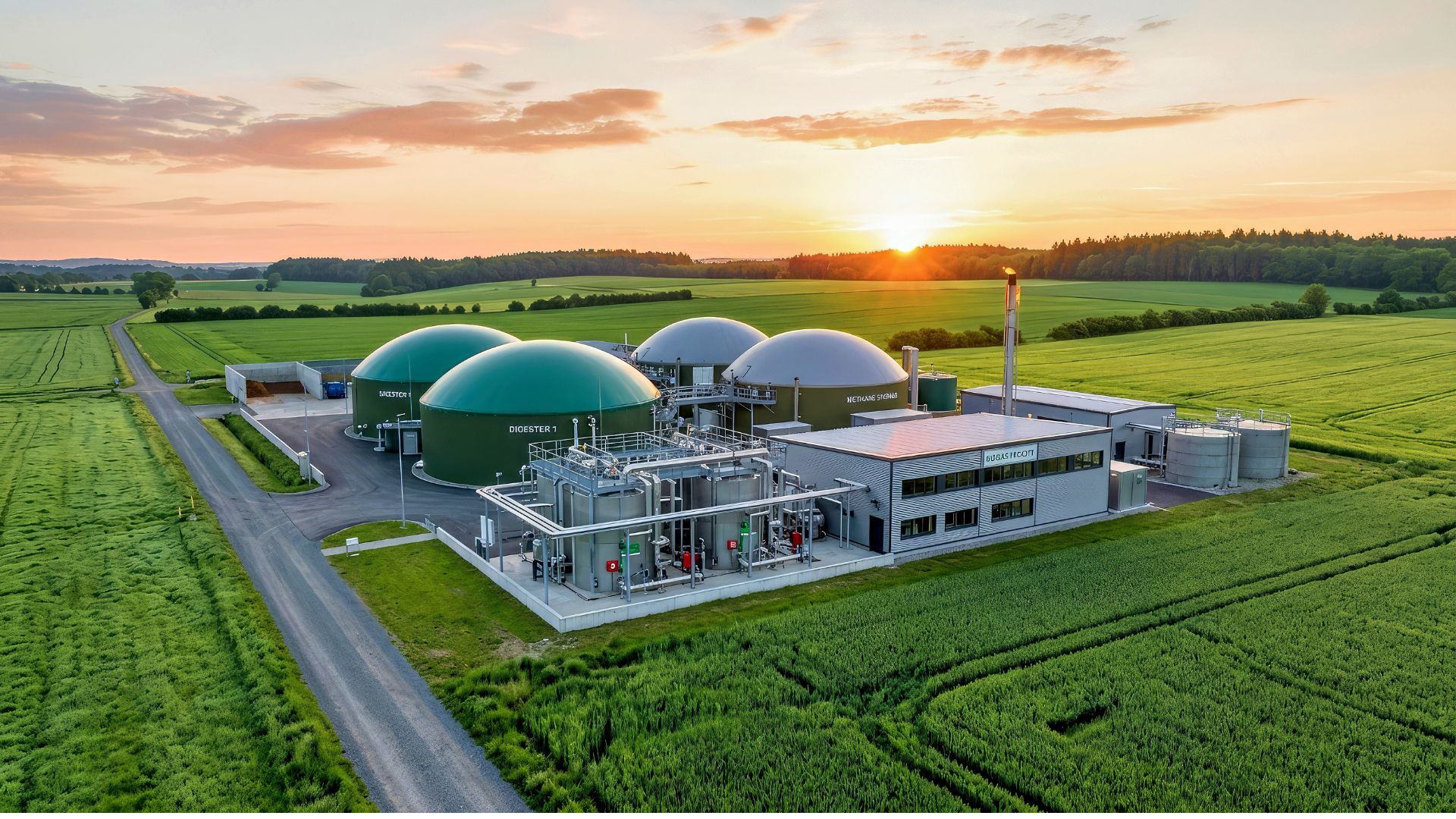
In practical terms, the UK is shifting from a new-build biogas CHP market to a retrofit and upgrading market. A partner able to offer biomethane upgrading solutions alongside CHP capability enters conversations that a pure new-installation vendor cannot access. The pipeline is defined and dated: a retrofit market on a fixed clock.
Data centres now consume 23% of Ireland’s electricity, up 518% since 2015 (Central Statistics Office, 2025). Their total consumption reached 7,663 GWh in 2025, and is projected to reach 30% of national electricity demand by 2030 (SEAI / EirGrid). The scale of that trajectory has changed how Ireland regulates large energy users.
In December 2025, the Commission for Regulation of Utilities (CRU) published a new framework for data centres with a maximum import capacity above 1 MVA. Under the new rules, data centres above 10 MVA are required to develop on-site generation capacity equivalent to 100% of their grid connection, with at least 80% of their annual consumption covered by renewable investments made within Ireland (CRU Decision Paper, December 2025). The framework ended a de-facto moratorium on new data centre grid connections that had been in place in the Dublin area since 2022.
For commercial partners in Ireland, this creates a clearly-scoped market opportunity. Every new data centre project above the threshold now needs a behind-the-meter generation solution dimensioned to its grid connection, with high electrical efficiency, heat recovery, and the ability to integrate with renewable sources. Cogeneration systems designed for continuous operation, sized to the specific load profile of a data centre and running on natural gas today with a transition path toward biomethane or hydrogen, fit that need. The pipeline is driven by regulation, not by discretionary investment. That makes it unusual for the sector: a market with visible boundaries and defined timing.
On 1 January 2026, France activated a blending mandate for biomethane in the natural gas grid, requiring suppliers to source a fixed share of the gas they distribute from biomethane producers through a system of Biogas Production Certificates (French Ministry for Energy Transition). A month later, on 12 February 2026, the government published PPE 3, its multi-year energy programming document, which sets an objective of 44 TWh of biomethane injected into the grid by 2030 and up to 82 TWh by 2035 (France Gaz, April 2026).
These decisions land on top of a mature cogeneration sector. France currently operates approximately 1,000 biogas cogeneration plants and more than 800 biomethane injection sites, with a total installed biomethane capacity of 15.6 TWh at the end of 2025, roughly equivalent to 2.5 nuclear reactors’ worth of gas production (France Gaz / NaTran, 2026). The IEA identifies France, alongside Italy and Denmark, as one of Europe’s fast-growing biomethane markets (IEA Renewables 2025).
The specific opportunity for commercial partners lies in the conversion pipeline. According to NaTran, approximately 100 existing French biogas cogeneration plants are candidates for conversion to biomethane injection, representing over 200 million EUR in potential investment (NaTran, April 2026).
In practical terms, France combines a large existing base of biogas CHP with a firm regulatory push toward biomethane and a public investment framework that makes conversion projects bankable. Partners with both biomethane upgrading capability and CHP retrofit experience can address a plant’s transition end to end, from continuing electricity generation to gas grid injection.
Since 2021, the EU Modernisation Fund has disbursed approximately 15.5 billion EUR to Central and Eastern European member states, with the largest shares going to Czechia, Romania and Poland (European Commission, 2025). Much of this funding targets the phase-out of coal-fired power and district heating, and the replacement of that capacity with high-efficiency cogeneration plants able to run on natural gas today and on hydrogen tomorrow.
In Poland, coal still accounted for 56.2% of electricity generation in 2024, down from over 80% in 2018 (Forum Energii, Energy Transition in Poland Edition 2025). Analysts expect up to 8 GW of coal-fired capacity to leave the market from 2025 onwards, as capacity contracts expire and cannot be renewed under current EU state aid rules, with a further wave of approximately 6 GW closing between 2029 and 2030 (Forum Energii, 2025). This creates a systemic requirement for replacement capacity that is dispatchable, low-emission and compatible with existing district heating networks. Gas-fired cogeneration is a direct fit.
In Czechia, coal currently supplies more than one-third of national electricity and half of the country’s district heating, and coal-fired plants are scheduled for retirement by 2033 at what the IEA describes as an “almost unprecedented pace” (IEA, Energy Policy Review Czechia 2025). The IEA advises Czechia to scale up alternative dispatchable capacity while avoiding excessive dependence on natural gas, recommending that coal plants be retrofitted where possible to run on low-carbon fuels including biofuels and hydrogen (IEA, 2025). Cogeneration is present in both the substitution and the retrofit pathway.
For commercial partners, Central and Eastern Europe is currently the largest coal-to-gas cogeneration retrofit market in the EU. The pipeline is publicly funded, and the technical requirements are explicit: high-efficiency systems, hydrogen-ready designs, and district heating integration. Partners with proven CHP experience and a portfolio positioning toward the low-carbon fuel transition can compete meaningfully in tenders that in mature Western European markets are effectively closed.
Unlike the markets discussed so far, Spain’s cogeneration and biogas story is still being written. In September 2024, the Spanish government adopted an updated National Integrated Energy and Climate Plan (PNIEC 2023-2030) that sets an objective of 20 TWh of biogas production by 2030, of which approximately 12 TWh should be in the form of biomethane injected into the gas grid (Ministerio para la Transición Ecológica y el Reto Demográfico, MITECO, 2024).
The starting point today is modest in scale. Spain had 210 operational biogas plants in early 2024, with a total installed capacity of 836 MW (European Biogas Association, EBA Statistical Report 2024). The reference regions for future development are Andalusia, Castilla-La Mancha and Castilla y León, where agricultural and livestock residues concentrate. The theoretical potential, however, is substantial. An assessment by the European Biogas Association identifies Spain as the country with the highest untapped biomethane production potential in the EU by 2050, with up to 7 billion cubic metres per year achievable from biomass on underutilised land (European Biogas Association, 2024).
The regulatory framework needed to translate that potential into projects is still taking shape. Support schemes, tariff structures and the specific role of cogeneration are all subject to decisions expected between now and 2030. Membership of the Asociación Española del Biogás (AEBIG), the national trade association, is one of the ways in which technical suppliers position themselves within that formative period.
For commercial partners, the practical implication is that Spain does not offer a mature retrofit pipeline like the UK, a defined regulatory push like France, or public tenders like Poland and Czechia. What it offers is a market whose rules are being written now. Presence at this stage, through recognised institutional channels, translates into a position that latecomers will find much harder to reach once the framework is settled and the first tenders are awarded.
A standalone cogeneration unit is now close to a commodity in Europe. Multiple established manufacturers can supply engines of comparable efficiency and specification, at prices that competitive tender processes push toward the same range. What differentiates a commercial partner from a pure equipment vendor is what surrounds the CHP unit.
On the fuel side, biomethane upgrading enables an existing biogas CHP installation to convert to biomethane injection into the gas grid, opening the revenue paths that the UK and French markets are currently building around. Hydrogen-ready designs allow the same engine architecture to accept increasing shares of low-carbon hydrogen as the fuel becomes available, extending the useful life of the asset and matching the direction of European policy (Article 25 of the EU Energy Efficiency Directive).
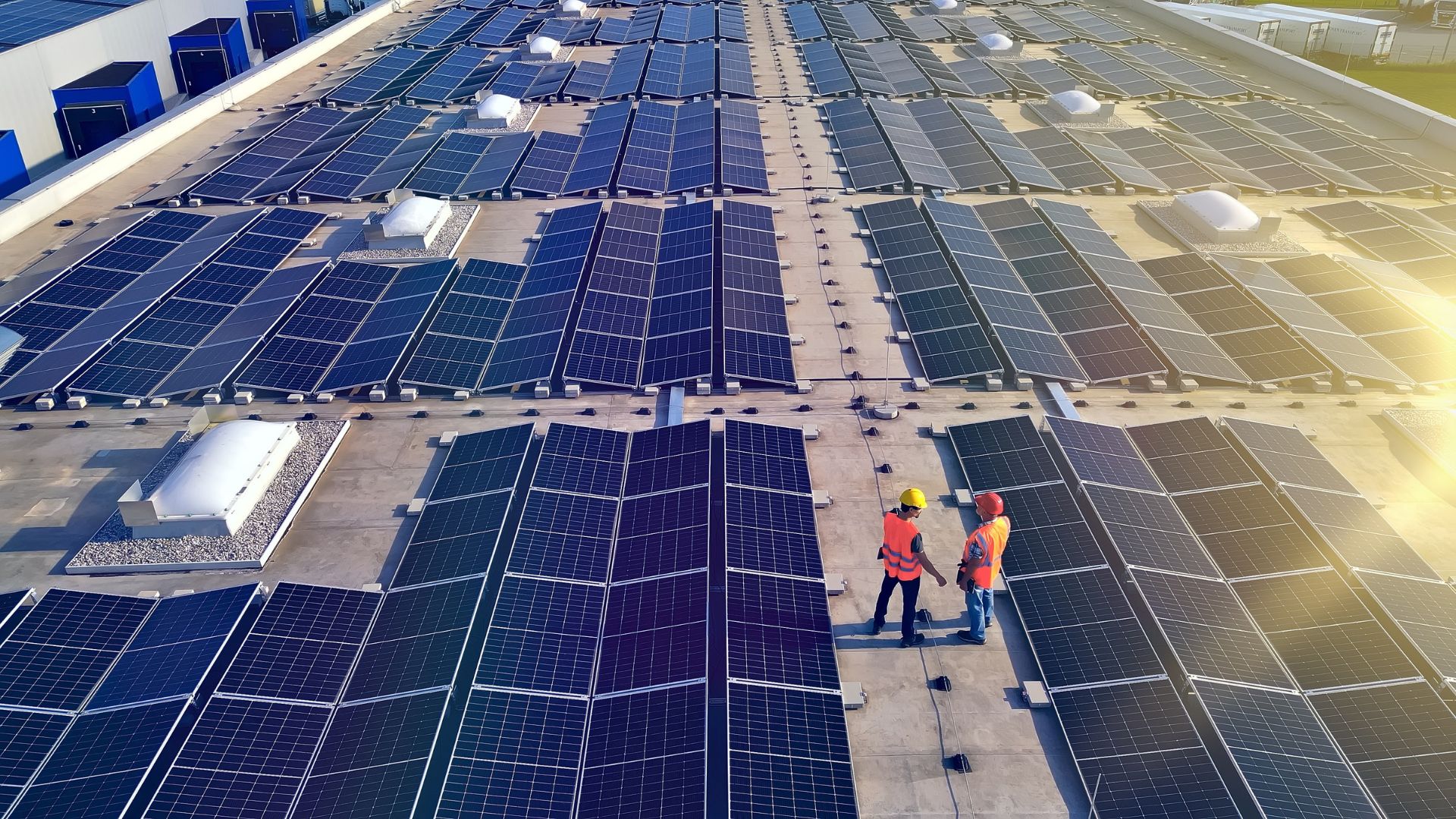
On the electrical and thermal side, integration with photovoltaic panels, heat pumps and battery storage transforms the CHP unit from a single source of power and heat into a coordinated on-site energy system. Photovoltaic capacity covers baseload during daylight, freeing the CHP unit to focus on the load hours where its efficiency matters most. Heat pumps handle low-temperature heating and cooling loads for which CHP would be oversized. Battery storage smooths the electrical dispatch profile and supports revenue from balancing services, where market rules make these available.
For a commercial partner, the ability to deliver these components as a coordinated system, rather than pass through separate contracts for each, is the difference between selling a machine and delivering an energy solution. It also changes what the partner competes on. The competition shifts from price against equipment vendors to design capability against competitors that do not offer the full stack.
Since 2009, MTM Energia has built and commissioned more than 100 cogeneration, trigeneration and biogas plants, and now operates as a system integrator whose portfolio covers cogeneration units from a few kilowatts up to more than 1.5 MW electrical, trigeneration with absorption chillers, biogas and biomethane upgrading systems, hydrogen-ready engine architectures, and integration with photovoltaic, heat pump and battery storage components.
Every plant is engineered in-house on a project-by-project basis. The technical scope is completed by mtmconnect, MTM’s cloud platform for remote monitoring, predictive maintenance and plant management. The platform provides continuous access to real-time machine data, tracks KPIs on energy performance, operating costs and CO2 savings, and covers the plant lifecycle from commissioning onward. For a project developer or an ESCO, this means a system that arrives already documented and monitored, rather than a piece of equipment to be wrapped in third-party diagnostic tools after handover.
MTM Energia delivers projects across Italy and is now developing its European presence by building commercial partnerships with EPC contractors, ESCOs and technical developers ( UK, France, Ireland and Spain). Membership of the Asociación Española del Biogás (AEBIG) formalises its position in the Spanish biogas ecosystem. For EPC contractors, ESCOs and business developers looking for a technical partner to design, deliver and support integrated cogeneration projects across Europe, MTM Energia’s commercial team is available for direct discussion.
Get in touch to explore specific projects together.